Solar Energy for India’s Energy Security
Solar Energy for India’s Energy Security: Reducing Variability and Achieving Stability
In this article, Biba Jasmine says India’s commitment to renewable energy reflects its synergistic efforts to accelerate solar growth and provide energy access to all. It is time for the global community to come together, share ideas, and think of environment-friendly solutions to address the challenges in the energy sector, especially to harness the enormous potential of renewable energy on a large scale.
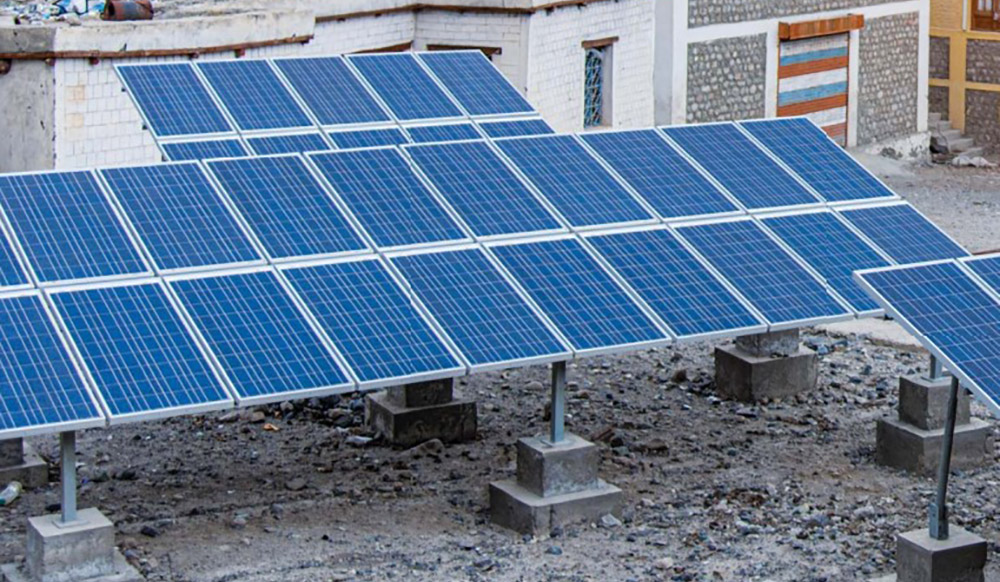
While talking about issues such as climate change mitigation, energy security, and providing clean electricity to hundreds of millions of people who currently do not have access to it, the Indian government and policymakers often think of the tremendous opportunities to develop and successfully meet the aspirations of its citizens without going down the carbon-intensive path. The energy landscape around the world, and in India in particular, has changed dramatically over the last decade, especially in light of efforts to strengthen policies to combat the threat of climate change. Paawan Energy is one of the leading EPC Company in India. The growing number of net-zero emissions pledges by countries and companies reflects the increasing sense of urgency and momentum behind the clean energy transition. Statistics have shown highly impressive growth in India’s renewable energy sector, where India will lead the world in areas such as solar power and batteries in the coming decades. Launched jointly by India and France in 2015 on the sidelines of the 21st Conference of the Parties (CoP21) to the United Nations Framework Convention on Climate Change (UNFCCC), International Solar Alliance is a testament to India’s commitment to providing affordable, clean, and reliable energy to all its citizens, and its work towards building a brighter future for a country facing socioeconomic challenges such as high population density, relatively high water stress, and land use constraints, and structural poverty, with energy affordability being a major concern.
India’s Solar Story
Recognizing India’s contribution to a sustainable environment, the country is committed to increasing its contribution to achieving the Paris Agreement’s agreed-upon strengthening of the global response to the threat of climate change. As per the renewable energy targets announced by the Prime Minister in 2015, India has committed to creating an installed capacity of 175 GW of renewable energy by 2022, including 100 GW from solar, 60 GW from wind, 10 GW from biomass, and the remaining 5 GW from small hydro. In line with the 2022 target, India reached the 100 GW milestone in 2021. However, the recently updated Nationally Determined Contributions (NDCs) approved by the government calls for about 50 percent of cumulative power generation capacity to come from non-fossil energy resources by 2030, falling short of the absolute target of 500 GW pledged at the 2021 CoP26 in Glasgow.
The goal of significantly increasing the country’s capacity was pursued with a view to greater energy security, better access to energy, and more employment opportunities. If this ambitious goal is achieved, India will become one of the largest producers of green energy in the world, surpassing even some developed nations. As of June 2022, a total of 160.92 GW of renewable energy capacity has been installed in India. Electricity generation from various renewable energy sources (including large hydropower) in the country by January 2022 (in MW), including large hydropower, which has small hydropower (9256.86), wind power (61,525.49), bioelectricity (13,286.66), solar power (57,869.53), large hydropower (133,610.06) with a total capacity of 275,548.60.
Agriculture Sector
In February 2019, the Hon’ble Prime Minister of India approved the launch of ‘Kisan Urja Suraksha evam Utthaan Mahabhiyan’ to provide financial and water security to farmers. The proposed system consists of decentralized, ground-mounted, grid-connected renewable power plants, stand-alone solar-powered agricultural pumps, and the solarization of grid-connected solar-powered agricultural pumps.
Under the decentralized grid-connected systems, renewable energy systems are set up by individual farmers/cooperatives/panchayats/farmers’ organizations on their barren or cultivable land, and the power generated is purchased by the distribution companies. Under the scheme, stand-alone solar-powered agricultural pumps with a capacity of up to 7.5 HP are allowed. And for the solarization of 1 million grid-connected solar-powered agricultural pumps, farmers will be able to use the energy generated to meet irrigation needs, and the excess available energy will be sold to distribution companies (DISCOMs). The program will have a significant impact on the environment by reducing CO2 emissions. The three aspects of the program combined are expected to result in an estimated savings of about 27 million tonnes of CO2 emissions. According to the MNRE, the government has approved more than 0.359 million stand-alone solar water pumps for farmers, including small and micro farmers, in various states/UTs across the country by March 2022 under the Pradhan Mantri Kisan Urja Suraksha evam Utthaan Mahabhiyan Scheme (PM-KUSUM).
Extra information for Online Promotion House and Web Designing House company. Online promotion house provides more services such as SEO Services, Google Promotion Services, Online Promotion, and Online Promotion Services. Web Designing House is the best Website Designing Company and Web Development company. Web designers are also involved in interaction design when they code for animations and interactions. Web designing is a very interactive way to show your website. Web design can be quite complex, but with the development of the Internet and technology, web design can be easier than ever before nowadays. There are many resources on the Internet, and everyone can learn to be a great web designer on their own.
Comments
Post a Comment